


Choose your Country


Tyres are where performance meets reality.
Every specification - 23.50 PS, perimeter frame, 280 mm disc brakes - means nothing if the rubber connecting you to the tarmac can't deliver. The contact patch, those two palm-sized areas where your motorcycle actually touches the road, determines whether engineering excellence translates into riding confidence.
The Pulsar NS200's radial-tyre specification represents a significant upgrade that transformed how this street fighter performs. Here's why this update matters more than many riders realise.
Not all tyres are constructed equally.
Bias-ply construction: Cord layers run diagonally across the tyre, overlapping at angles. Traditional, proven, but limited in performance characteristics.
Radial construction: Cord layers run perpendicular to the direction of travel, with additional belts running circumferentially. Modern, sophisticated, superior in multiple performance areas.
The NS200 now rolls on radial rubber:
That "R" designation confirms radial construction: a specification detail that fundamentally changes the riding experience.
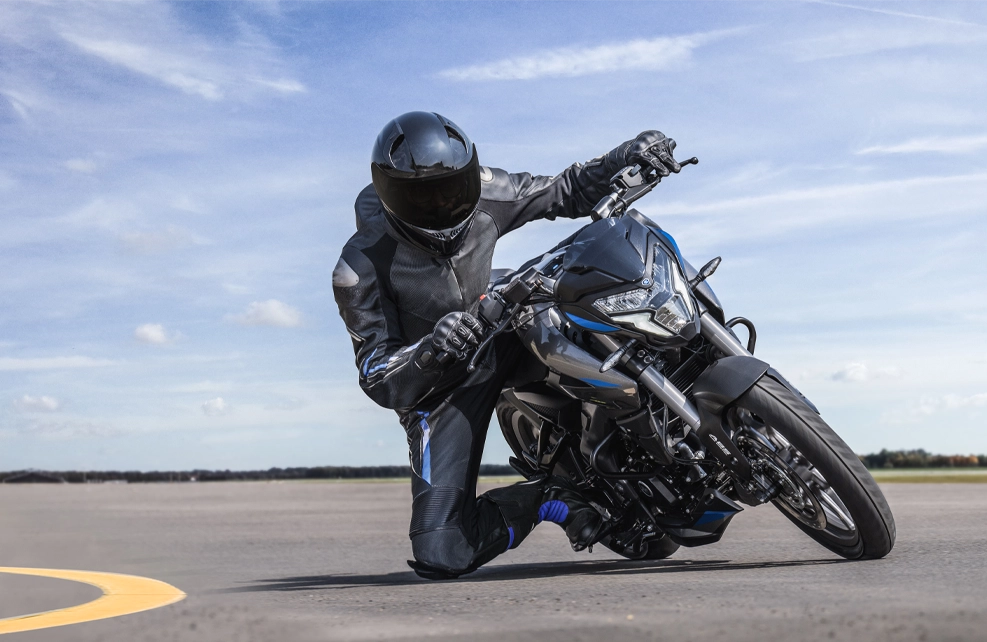
Radial construction allows the tread and sidewall to function more independently.
The tread conforms to road surfaces more effectively, maintaining contact through undulations, bumps, and imperfections. More contact means more grip. More grip means more confidence.
When you lean the NS200 into corners, the radial tyre's flexible tread maintains its footprint. The contact patch stays consistent rather than distorting unpredictably. You feel this as stability with the motorcycle tracking precisely where you point it.
Hard braking. Aggressive acceleration. Mid-corner bumps.
Each scenario transfers a significant load through the tyres. Radial construction handles these forces more predictably than bias-ply alternatives.
The NS200's 23.50 PS and 18.3 Nm deserve tyres that can manage the forces this engine produces. When you accelerate hard, the radial rear tyre maintains its profile, delivering traction consistently. When you brake late into corners using the 280 mm front disc, the radial front tyre responds predictably.
This predictability is confidence. You learn the tyres' limits and trust them.
Radial tyres communicate more clearly.
Traction levels, surface conditions, grip limits: the tyre transmits this information through the chassis to your hands and body. You sense what's happening at the contact patch without guessing.
For spirited riding on varied surfaces, this feedback proves invaluable. You know when you're approaching limits. You adjust instinctively. The NS200 becomes an extension of your senses rather than a machine you're merely operating.
Real-World Confidence Gains
The perimeter frame delivers sharp handling. Radial tyres ensure you can use it.
Lean angles that felt tentative on lesser rubber become comfortable. The tyre holds its line. It doesn't squirm or deflect unexpectedly. You commit to corners knowing the grip will be there.
For a complete understanding of how the frame and tyres work together, explore the Pulsar NS200 specifications covering engine, weight, and chassis details.
Radial construction typically incorporates more sophisticated tread patterns.
Water evacuation improves. Grip on damp surfaces increases compared to bias-ply alternatives. The confidence gap between dry and wet riding narrows.
This matters for daily riders who can't avoid occasional rain. The NS200 remains capable when conditions deteriorate, not just when everything is perfect.
The NS200's performance invites higher speeds.
Radial tyres maintain their profile better at sustained velocities. They resist the centrifugal forces that can distort lesser tyres. High-speed stability improves noticeably.
Whether cruising on highways or pushing pace on open roads, the radial rubber keeps the NS200 planted and predictable.
Confidence isn't just about performance. It's about consistency over time.
Radial tyres typically offer:
This durability contributes to overall NS200 reliability. You're not constantly monitoring tyre condition or worrying about sudden performance drop-off. The tyres deliver consistent confidence throughout their service life.
The Pulsar NS200 combines this tyre specification with proven engine architecture and robust components for dependable long-term ownership.
Radial tyres don't work in isolation. They complement the NS200's comprehensive capability:
| Component | Specification | How Radial Tyres Enhance It |
|---|---|---|
| Perimeter frame | High stiffness, low flex | Tyres deliver grip matching the chassis precision |
| 280 mm front disc | Strong stopping power | Tyres provide traction to use the full braking capability |
| 23.50 PS engine | Class-leading power | Tyres handle acceleration forces confidently |
| Nitrox monoshock | Consistent damping | Tyres maintain contact through suspension movement |
| 145 kg kerb weight | Excellent power-to-weight | Tyres manage dynamic loads during spirited riding |
The radial-tyre update elevated every aspect of the NS200's performance. It's why this motorcycle continues to set benchmarks. Discover why the Pulsar NS200 still dominates the 200cc street fighter segment.
Technical explanations matter less than riding experience.
First corner: The tyre holds its line without protest. You exit faster than expected.
First emergency stop: The front tyre grips hard without breaking traction. You stop shorter than anticipated.
First wet patch: The tyre maintains composure. Anxiety doesn't spike.
First long ride: Consistent behaviour builds trust. By journey's end, you've stopped thinking about tyres entirely.
That's the ultimate confidence indicator. When equipment performs so reliably that you forget it exists. You focus on riding, not worrying.
The radial-tyre specification isn't a minor update.
It's a fundamental enhancement that redefined what the Pulsar NS200 delivers. Grip improved. Stability increased. Feedback sharpened. Confidence grew.
For riders who push their motorcycles - who explore lean angles, brake late, and accelerate hard - this upgrade matters profoundly. The NS200 always had the engine and chassis for serious performance. Now it has the rubber to match.
Confidence comes from trust. Radial tyres give you reason to trust every input, every corner, every ride.
Visit your nearest Bajaj showroom or contact us today to experience radial-tyre confidence yourself.
1. What's the difference between radial and bias-ply tyres?
Radial tyres have cord layers running perpendicular to the travel direction with circumferential belts, while bias-ply cords run diagonally. Radials offer better grip, stability, feedback, and typically longer life.
2. Can I replace radial tyres with bias-ply on the NS200?
Technically possible, but not recommended. The NS200's chassis and suspension are tuned for radial-tyre characteristics. Switching to bias-ply would compromise handling, stability, and overall performance.
3. How long do the NS200's radial tyres typically last?
With proper maintenance and moderate riding style, expect 12,000-18,000 km from the rear and slightly more from the front. Aggressive riding reduces lifespan; conservative riding extends it.
4. Do radial tyres require different maintenance?
Basic maintenance remains similar—regular pressure checks, visual inspections, and timely replacement. However, radials are more sensitive to incorrect pressure, so consistent monitoring matters more.
5. Are radial tyres more expensive to replace?
Generally, yes, but the performance improvement and longer service life often offset the price difference. Quality radial tyres represent a worthwhile investment for the NS200's capabilities.
Pulsar NS200 Braking and Suspension Safety Systems Explained
Know More
How Pulsar NS200 Styling Helps Young Riders Stand Out in the City
Know More
Why Pulsar NS200 Comfort Setup Works for Everyday City Riders
Know More
The Engineering Behind Pulsar NS200 Perimeter Frame and Rigidity
Know More
How Pulsar NS200 Power Characteristics Suit Urban Riding
Know More
Pulsar N160 Frame and Structural Design Explained
Know More
Why Pulsar N160 Power Delivery Feels Balanced for Daily City Use
Know More
Pulsar N160 ABS and Braking Hardware Explained
Know More
How Pulsar N160 Design Elements Connect With New-Age Riders
Know More
How the Pulsar N160 Engine Platform Reflects Modern Street Engineering
Know More
How Pulsar N160 Build Quality Supports Long-Term City Use
Know More
Pulsar NS200 Colours 2026: Complete Guide
Know More
Pulsar NS200 Specifications Explained (Engine, Weight, ABS)
Know More
Pulsar NS200 vs NS160: Which One Should You Buy?
Know More
Pulsar NS200 Mileage Guide: City & Real-World Results
Know More
How to Maintain Your Pulsar NS200 for Maximum Performance
Know More
Pulsar N160 Specifications: Dual-Channel ABS, Engine & Weight
Know More
Pulsar N160 Mileage & Fuel Efficiency: City vs Rural Areas
Know More
What Makes Pulsar N160 a Standout Urban Performer?
Know More
5 Features of Pulsar N160 Riders Often Overlook
Know More
Pulsar N160 vs N125: What Should You Choose?
Know More
Why Pulsar N160 Is Considered the Segment's Best Handling Bike
Know More
Pulsar NS200 Design and Feature Set Explained from a Rider’s Perspective
Know More
Bajaj Bikes in Sri Lanka: Smart Choices for Everyday Journeys
Know More
Is the Bajaj Discover 125 a Worthwhile Investment for the Long Run?
Know More
Speed Meets Elegance: The Rise of Performance Bikes in Colombo’s Youth Scene
Know More
Is the Bajaj Discover 125 the Ideal Commuter for Galle's Lively Roads?
Know More
5 Features That Put the NS400 Z on Every Performance Lover’s Wishlist
Know More
Bajaj CT 100 Price and Competition: Performance Riding within Your Budget
Know More
Beyond the City Limits: The Discover 125 Bajaj's Performance on Sri Lanka's Rural Roads (Kandy & Matara)
Know More
Bajaj CT 100 Price vs. Rivals: How It Stacks Up Against Other 100cc Bikes in Sri Lanka
Know More
Built for the Bold: How the Bajaj Pulsar Conquers Colombo and Climbs Kandy
Know More
Pulsar N160 in Sri Lanka: Unveiling the New Flagship and Its Impact on Local Enthusiasts
Know More
Redefine Every Ride: Pulsar N160’s Mileage and Muscle for Sri Lankan Adventures
Know More
Unleashing the Beast: Why the Pulsar NS400 Z is the Ultimate Power Bike for Sri Lanka’s Young Riders
Know More
City Racer’s Dream: How the Bajaj Pulsar NS200 Delivers Thrill and Speed in Urban Chaos
Know More
Bajaj Bikes 2025: Unlock Your Ride – Complete Price List, Features & Buying Guide
Know More
Bajaj Pulsar 2025: Your Ultimate Value-for-Money Buying Guide
Know More
Bajaj Discover 125 in Sri Lanka: Top Features That Make it a Commuter Favourite
Know More
Bajaj Discover 125 vs. Rivals: Performance and Features in Sri Lanka's 125cc Segment
Know More
Riding Smart: How Bajaj Pulsar N160 Balances Style, Safety & Performance
Know More
Efficiency Meets Endurance: The Bajaj Discover 125 for Daily Travelling
Know More
7 Reasons the Pulsar NS400 Z Outclasses Its Rivals in the 400cc Segment
Know More
Ride Smart: How the Pulsar NS400Z's Riding Modes Adapt to Your Journey
Know More
Pulsar N125 vs. NS400 in Sri Lanka: Choosing Your Perfect Street Fighter for Urban Riding
Know More
Why Riders Swear by the Pulsar NS200: A Deep Dive into Its Best Features
Know More
Why the Pulsar NS200 Black Is the Ultimate Street Icon for Colombo’s Young Riders
Know More
7 Essential Maintenance Tips for Your Sports Bike to Increase Its Life
Know More
The Community Workhorse: What the CT 100 Means to Everyday Riders
Know More
Thinking of Buying the Pulsar NS200 in Sri Lanka? Read This First
Know More
CT 100 ES Review: Mileage, Features & Why It’s Built for Sri Lanka's Roads
Know More
From Potholes to Packed Streets: Discover 125 Can Take It All
Know More
The Pulsar NS & N Series: What Sets Them Apart From the Rest?
Know More
5 Reasons the Bajaj CT 100 Is the Best Investment for Your Side Hustle
Know More
Your Complete Guide to Bajaj Bikes in Sri Lanka: Models, Prices, and Where to Buy
Know More
Bajaj Pulsar Series in Sri Lanka: Unveiling the Thrill
Know More
Fuel Efficiency and Affordability: Why Discover Bike Dominates Sri Lanka's Commuter Market
Know More
Buying a Used Bajaj Bike in Sri Lanka: Smart Tips for a Reliable Purchase
Know More
Factors Influencing Bajaj Motorcycle Price: What You Need to Know Before Buying
Know More
Why Small Business Owners Trust the Bajaj CT 100
Know More
Built for Business: Why the Bajaj CT 100 is the Ultimate Partner for Daily Earners
Know More
Driven by Value: Best Bikes for Ambitious Youth in Sri Lanka
Know More
From Colombo to Jaffna: A Journey Best Taken on the Pulsar NS400Z
Know More
Agile & Efficient: How the Pulsar N125 Conquers Negombo Traffic
Know More
Optimising Fuel Efficiency for CT 100: Riding Habits That Make a Difference
Know More
Choosing Your Thrill: A Guide to Bajaj Pulsar Models in Sri Lanka
Know More
Bajaj in Sri Lanka: A Legacy of Trust and Innovation on Island Roads
Know More
Buying a Bajaj in Sri Lanka: New vs. Used & Financing Options
Know More
What Makes the Pulsar N160 Engine Ideal for Mixed Terrain Riding?
Know More
Built for Our Roads: Why the Pulsar N160 Feels So Right at Home in Sri Lanka
Know More
Why the Pulsar N160 Turns Heads Without Even Trying
Know More
Crush Weekend Rides to Kandy in Style with the Pulsar NS200
Know More
Bajaj Bike Prices in Sri Lanka: Top Finds Under Your Budget
Know More
How the CT 100 ES Electric Start Makes Office Commutes Easier
Know More
Bajaj’s ExhausTEC Explained: How It Improves Torque and Pickup
Know More
Top Bajaj Bikes for Delivery Riders in Colombo and Suburban Areas
Know More
Bikes Price in Sri Lanka 2025: Why Bajaj Models Offer Best Value
Know More
ABS in Pulsar N160: A Must-Have Feature for Urban Safety
Know More
What Makes the Bajaj CT 100 One of the Most Fuel-Efficient Bikes in Sri Lanka
Know More
Bajaj New Bike Price in Sri Lanka: What to Expect in 2025
Know More
Bajaj Motorcycle Price in Sri Lanka: Complete 2025 Guide
Know More
Pulsar N160 Performance Review: Ideal for City Streets and Long Routes?
Know More
Pulsar N160 vs Pulsar NS200: Detailed Comparison for Sri Lankan Riders
Know More
CT100 ES: Sri Lanka's Most Affordable Bike for Daily Commutes
Know More
5 Reasons Why Discover 125 Is Perfect for Business Use in Sri Lanka
Know More
Stylish and Street-Smart: Is the Pulsar N160 Right for You?
Know More
Pulsar N125: The Perfect First Bike for Young Riders in Sri Lanka
Know More
What Makes Pulsar N160 Dual FI ABS Stand Out in Style & Safety?
Know More
Pulsar NS200: The Ultimate City Sportbike for Young Riders in Sri Lanka
Know More
Bajaj CT 100: Sri Lanka’s Homegrown Champion for Reliable Commuting
Know More
Introducing the Iconic Bajaj Pulsar N160 Dual ABS: Your Partner for Countless Adventures Across Sri Lanka
Know More
20 Years & Counting: Exploring Why the CT 100 Remains Sri Lanka’s #1 Commuter Bike
Know More
Bajaj Discover 125: Top 5 Features That Make the Bajaj 125 Perfect for Riders in Sri Lanka
Know More
Discover 125 Price in Sri Lanka: Is This the Best 125cc Bike for You?
Know More
The Bajaj Advantage: How ExhausTEC Makes City Riding Effortless
Know More
Top Riding Habits That Will Extend the Life of Your Bajaj Motorcycle
Know More
Understanding ABS in Bajaj Bikes: Why It Matters for Safe Riding in Sri Lanka
Know More
What Is Bajaj DTS-i Technology and How Does It Improve Your Engine Performance?
Know More
Bajaj Pulsar N160: A Beginner’s Guide to Sri Lanka’s Sporty Commuter
Know More
Bajaj CT 100 ES: A Budget-Friendly Bike with Great Performance
Know More
Bajaj Discover 125 – The Perfect Feature-packed Bike for Exploring Vibrant Colombo Streets
Know More
Top 125cc Bikes in Sri Lanka: The Perfect Balance of Power and Fuel Efficiency
Know More
Power Meets Durability: How Bajaj Bikes Outperform on Sri Lanka’s Toughest Roads
Know More

